Two third of the people who suffered major heart attacks at Abu Dhabi over a three-year period were shown to have abnormal cholesterol levels. For the majority, it was a totally new revelation.
That is the part that catches most people off guard. High cholesterol does not come with a warning. No pain, no visible signs, no moment where you feel something is off. It builds quietly inside your arteries, sometimes for years, while you go about your normal life. Then it does not.
Approximately 50% of adults in the UAE have at least one lipid abnormality, according to current clinical data. The majority are undiagnosed. And the reason is simple: without a cholesterol test, there is nothing to find because there is nothing to feel.
That’s why cholesterol tests will be one of the most significant decisions you can make for yourself to protect your wellbeing in 2026, regardless of whether you have been sick, but quite precisely due to not feeling ill in the first place.
Why High Cholesterol Has No Symptoms
Here is something that surprises a lot of people. High cholesterol isn’t something that hurts you. It is just biological process, in which your LDL (Low-Density Lipoprotein) cholesterol accumulates in your artery walls that slowly gets narrower the blood flow needs. The arteries do not send a pain signal while this is happening. There is no inflammation you can feel, no swelling you can see.
This is why doctors call it a “silent” condition. The first symptom, often a heart attack or stroke, is also the first indication that something was seriously wrong. By that point, the underlying problem has been developing for years.
70%+ of patients with heart disease or cardiac risk factors do not maintain appropriate cholesterol levels to prevent a severe cardiac event – Cleveland Clinic Abu Dhabi
Heart disease kills roughly 30% of all people in the UAE per year meaning that this condition is responsible for the highest rate of mortality in the country. Heart disease and stroke were the two most common reasons for deaths in 2023, UAE physicians have noted increased occurrence of the disease in younger adults not only in persons above the age of 50. The threat is not only one of imagination; it is also not one of the future.
What Cholesterol Actually Does in the Body
Cholesterol itself is not the problem. Our bodies require it for the formation of cell membranes, creation of hormones, and production of vitamin D. It is all about finding the right balance that is the issue.
- LDL cholesterol (“bad”) – carries cholesterol into the artery walls. Too much LDL and it builds up as plaque, gradually restricting blood flow. Every point of increased LDL raises the risk of a heart attack by approximately 25%, according to UAE cardiologists
- HDL cholesterol (“good”) – works in reverse, collecting excess cholesterol from the arteries and returning it to the liver for removal. Higher HDL is protective
- Triglycerides – they are a kind of fat (blood fat) that accumulates when there are a lot of excess calories, alcohol consumption, and a diet full of refined carbohydrates. High triglyceride levels combined with increased LDL levels are a very bad situation from a heart standpoint
- Non-HDL cholesterol – it’s becoming evident that this measure is a much more accurate predictor of cardiovascular risk compared to LDL only because it accounts for all the bad cholesterol particles in one single figure
A standard cholesterol and lipid profile test measures all of these, giving your doctor a full picture of where your cardiovascular risk actually stands, not just one number in isolation.
Who Is Most at Risk in the UAE?
Certain factors raise cholesterol faster and push it higher. Some are lifestyle-related. Some are biological. Knowing which apply to you tells you how urgently a cholesterol screening matters.
Diet and lifestyle
Consumption of sodium-heavy restaurant meals, little to no physical activity, and Truth is most offices are sedentary have become part of daily life for many Dubai residents. All of these combined yet are the reasons for high LDL levels and triglycerides.
Type 2 diabetes
Diabetic dyslipidaemia, high triglycerides, low HDL, and dense LDL particles, is one of the most dangerous cholesterol patterns and is common in the UAE’s diabetic population.
Family history
Familial hypercholesterolaemia (FH) is a hereditary condition that results in you having high LDL even from a very young age. About one out of every 250 people has FH but very few of them have ever been recognized.
Age and hormonal shifts
Cholesterol naturally rises with age. Women’s LDL typically increases significantly after menopause as oestrogen’s protective effect declines.
Obesity
Too many calories in the body, in particular in the form of belly fat, decreases HDL at the same time it increases LDL and triglycerides in the blood.
Thyroid conditions
Hypothyroidism slows the body’s removal of LDL from the blood, causing levels to climb even with a reasonable diet.
If at least two or more of the risk factors listed here match your situation, a yearly cholesterol test is more suited for you than one every few years.
When Should You Get a Cholesterol Test?
Asking about it regularly is one of the things people do most often, and the response will be easier to take in than you thought.
- Age 20+, no risk factors – baseline lipid profile, repeated every 4–6 years if results are normal (WHO recommendation)
- Age 40+ – annual cholesterol screening regardless of symptoms or perceived risk. Cholesterol risk compounds with age
- Any age with risk factors – diabetes, high blood pressure, obesity, smoking, or family history of heart disease all warrant annual testing
- Post-cardiac event – anyone who has had a heart attack or stroke needs LDL below 70 mg/dL and should be tested frequently to ensure treatment is working
- On cholesterol-lowering medication – testing every 3–6 months is standard to confirm the medication is effective and the dose is correct
UAE data point: The average LDL cholesterol level in a retrospective review of 30,000 patients with heart disease or cardiac risk factors at Mubadala Health facilities was 140 mg/dL, three times higher than the acceptable level for preventing a heart attack in at-risk patients. Most of these patients did not know their levels were that high.
If you are not sure when you last had your cholesterol checked, or if the answer is “never”, that is worth acting on. Everwell Home Health Care Center offers cholesterol blood testing that includes guidance on what your results mean and what to do next, not just a number on a page.
What Does the Cholesterol Test Actually Involve?
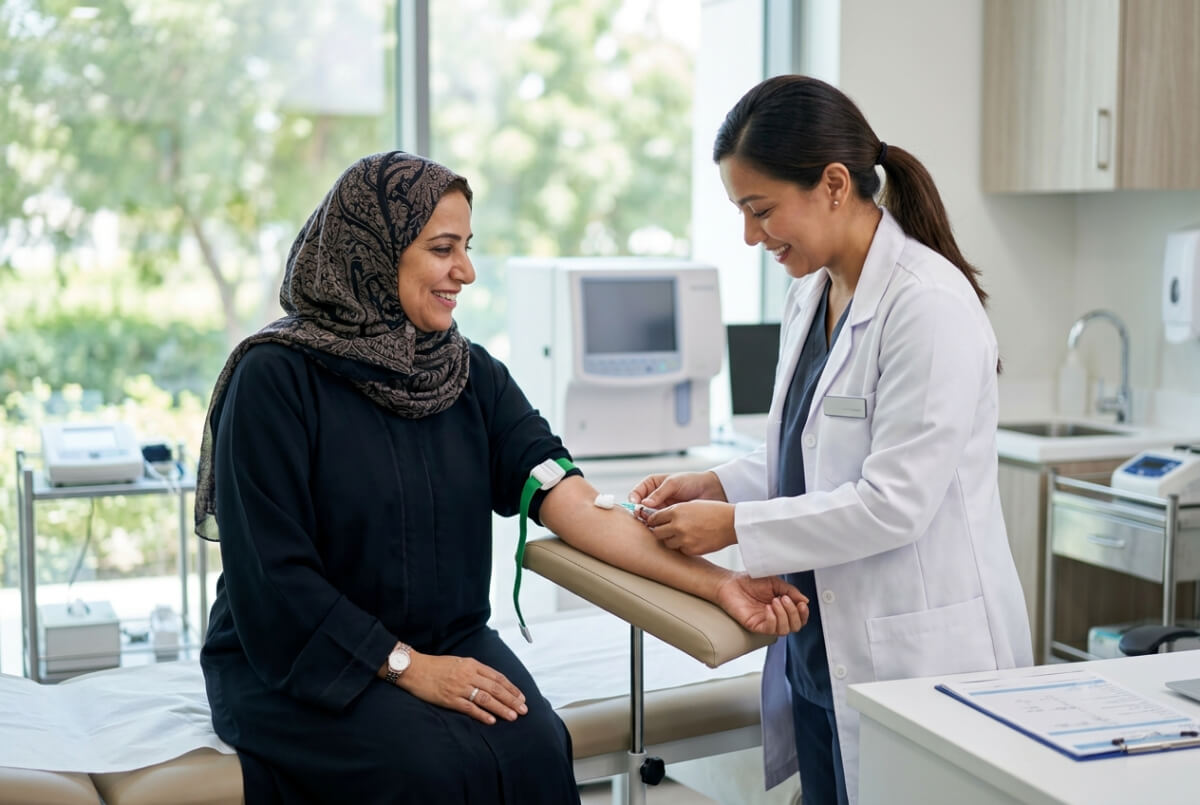
The test itself is straightforward, a blood draw, usually from the arm. A standard lipid profile requires fasting for 9-12 hours beforehand, though some newer non-fasting panels are available depending on what your doctor needs to assess.
Results typically cover:
- Total cholesterol (the overall level)
- LDL cholesterol (the primary risk marker)
- HDL cholesterol (the protective component)
- Triglycerides (blood fat, influenced heavily by diet)
- Non-HDL cholesterol (total minus HDL, an increasingly used composite risk marker)
The figures can only convey so much by themselves. The doctor will assess them compared to such factors as age, blood pressure, blood sugar, family history and whether the patient smokes, to figure out one’s 10-year actual heart risk. This gives a much more accurate picture against any one figure on its own.
What Happens If the Results Come Back High?
A high cholesterol result is not a diagnosis of doom. It is information, and early information is the best kind to have.
The response depends on how high the numbers are and what other risk factors are present. In many cases, lifestyle changes alone make a meaningful difference:
- Switch fat sources from mainly saturated ones (beef butter processed dairy products) towards largely unsaturated types like canola or olive oil, seeds and nuts, etc.
- Add soluble fibre like oats to your diet that are known for lowering blood cholesterol level as such.
- Cycling or walking regularly increases the production of HDL while helping the body reduce levels of triglycerides.
- Reducing intake of processed food, white bread, soft drinks which are major contributors to elevated triglyceride levels besides reducing alcohol consumption
- Quitting smoking, which suppresses HDL significantly
Where lifestyle changes are not enough, or where the risk is high enough that waiting for lifestyle changes to work is not safe, statins and other cholesterol-lowering medications are highly effective. The key is catching the problem early enough that you have options.
80% of premature heart attacks are preventable through lifestyle changes and early detection. The cholesterol test is often the first step that makes prevention possible.
The Case for Regular Cholesterol Screening in Dubai
Cholesterol isn’t limited by nationality, job title or fitness level. UAE residents, both Emiratis and expatriates, are often exposed to combinations of certain diets, a work culture that hardly allows for any physical activity, stress, and genetic factors which together contribute largely to the development of cholesterol as a common and serious health concern. Dubai Health Authority’s focus on early preventative screening for the country’s health as a major issue is first and foremost driven by the consistent data pattern the agency has been seeing people only having been discovered to have extremely high cholesterol levels after falling ill.
Regular cholesterol screening in Dubai does not require a hospital visit or a lengthy process. At Everwell Home Health Care Center, cholesterol testing is available as part of a full body checkup or as a standalone blood test, with results that include a proper explanation of what your numbers mean and what your next step should be. For those over 40 or managing multiple health conditions, a comprehensive checkup after 40 covers cholesterol alongside the other markers that matter most for your age group.
If you have been healthy and symptom-free, that is a good thing, but it is not the same as knowing your cholesterol is where it should be. The test is simple. The information it gives you is not.
Frequently Asked Questions
Does high cholesterol always show symptoms?
No, and that is exactly what makes it dangerous. High cholesterol is a condition without symptoms. No pain, no swelling, no warning – it is only until it causes a heart attack or stroke that one is even aware of its existence. The only way to find out whether your cholesterol is raised is through a laboratory test.
How often should I get a cholesterol blood test in the UAE?
Adults free from risk factors or a history of illness should get tested every 4-6 years since age of 20. After turning 40, and in the cases where someone is diabetic, hypertensive, or is overweight and is having a history of heart disease in the family, it is recommended that they get their cholesterol levels checked yearly.
Do I need to fast before a cholesterol test?
A standard lipid profile requires 9–12 hours of fasting to get accurate triglyceride readings. Some newer non-fasting panels are available for specific assessments. Your test instructions will specify what is needed based on which panel you are having done.
What is a dangerous cholesterol level?
In adults without underlying health issues, having an LDL cholesterol level above 160 mg/dL is seen as being high. Anyone suffering from coronary heart disease or having lots of risk factors should strive for an LDL level beneath 70 mg/dL – that’s thrice the lower level. The level that is considered appropriate for a person hinges on their overall cardiovascular risk score rather than a universal cutoff that everyone must follow.
Can I get a high cholesterol test done at home in Dubai?
Yes. Everwell Home Health Care Center provides home sample collection for cholesterol testing across Dubai, a DHA-compliant service where a nurse visits your home, takes the blood sample, and results are delivered digitally. It is a practical option for anyone who finds clinic visits difficult to schedule.
What should I do if my cholesterol is high?
A high result is not a crisis, it is information. Different people will need different interventions according to the degree to which their cholesterol numbers are out of range and other risk factors they may have. The right next step is speaking with a medical professional who can evaluate the whole situation together with you. Catching it early actually gives you more options rather than fewer.
Know Your Cholesterol, Before It Becomes Urgent
Everwell Home Health Care Center offers cholesterol testing and full lipid profile screening across Dubai, at home or at our clinic. Book today and get results that actually tell you where you stand.
Book a Cholesterol Test at Home