
You got your blood results back and bilirubin came up high. Before you start worrying, there is something worth knowing: high bilirubin does not always mean serious liver disease. But it does always mean something needs a closer look.
What is Bilirubin? It is a yellow pigment that occurs in the body when red blood cells degrade. Naturally, the liver processes Bilirubin which is later excreted from the body through bile and stool. Nevertheless, if the amount of Bilirubin accumulates, either because it’s being overproduced or the liver is unable to cope with it, or because the bile ducts are blocked, then the level of Bilirubin exceeds the normal level of the body. This condition is called hyperbilirubinemia and that is what is measured in the liver function tests offered in Dubai.
The cause behind the above-normal levels may be as trivial as Gilbert’s syndrome, a harmless hereditary disorder, or as serious as hepatitis, cirrhosis, or obstruction of the bile duct. The only way to get to the bottom of this situation is by conducting tests, making interpretations and investigating where needed.
What Are Normal Bilirubin Levels?
The presence of bilirubin can be demonstrated in two ways: as direct (conjugated) bilirubin and indirect (unconjugated) bilirubin, and combined. Knowing what kind of bilirubin is increased in blood enables one to identify the problem when it comes to its processing.
| Measurement | Normal Range (Adults) | What It Indicates When Elevated |
| Total Bilirubin | 0.2 – 1.2 mg/dL | Overall liver processing, the headline figure |
| Direct (Conjugated) | 0 – 0.4 mg/dL | Primarily signals bile duct obstruction or liver disease |
| Indirect (Unconjugated) | 0.2 – 0.8 mg/dL | Primarily signals excessive red blood cell breakdown or liver processing failure |
Jaundice, which is the visible manifestation of the yellowing of the skin and eyes, usually develops when bilirubin concentration reaches 2.5 -3 mg/dl or more. Otherwise, an increase in bilirubin level can only be detected by laboratory testing. This is one reason routine liver function testing matters: you can have elevated bilirubin for some time without any visible sign that anything is off.
What Causes High Bilirubin Levels?
Increased levels of bilirubin can be observed before or in the liver, or after it is processed by the liver.
Pre-Hepatic Causes – Too Much Bilirubin Being Produced
When the breakdown of red blood cells is faster than the processing of bilirubin by the liver, indirect bilirubin rises. This phenomenon is known as haemolysis and may be caused by some conditions, such as:
- Haemolytic anaemia – which is said to occur if blood cells are destroyed earlier than expected. Inherited haemolytic anaemia includes sickle-cell anaemia and thalassemia, while infections or autoimmune diseases can induce acquired forms of it.
- Malaria – which destroys red blood cells as part of its disease mechanism; relevant to the UAE given travel patterns across the region
- Severe infections or sepsis – which can trigger excessive red cell breakdown as a secondary effect
Hepatic Causes – The Liver Is Not Processing Normally
If the fault is in the liver itself, then either direct or indirect will be raised (and possibly both according to what aspect of liver function is affected) with these being common hepatic causes.
- Hepatitis A, B, or C – viral infection of the liver, which renders the liver less capable of processing. Hepatitis B and C are foods for thought for screening, most of all in populations where there is a risk of being exposed.
- Alcoholic liver disease and fatty liver (NAFLD/NASH) – as fat accumulates in hepatocytes it impairs their ability to work efficiently. Growing cases of NAFLD in the UAE are attributed to diet and high prevalence of metabolic syndrome.
- Cirrhosis – formation of scar tissue in the liver caused by years of illness leading to the decline of the functions of the liver.
- Gilbert’s syndrome-(the commonest benign inherited disorder – the bilirubin conversion is a little low in the liver) allows a slight increase in serum bilirubin, which becomes more marked during illness, fasting, or stress. It does not cause damage to the liver and is present in approximately 57-10% of the population and is usually identified incidentally on usual blood tests.
- Drug related liver injury – many drugs are now known to have an adverse effect on the liver, like some antibiotics, anti-inflammatory agents and statins. A rise in plasma bilirubin is proven to be an early measure of this stress.
Post-Hepatic Causes – Blocked Bile Flow
If the bile hasn’t been able to exit the liver normally due to the blockage of the bile ducts then direct bilirubin will move into the blood stream. This leads to the production of the condition: obstructive jaundice. Causes include:
- Gallstones – the most common cause of bile duct obstruction; gallstones blocking the common bile duct cause direct bilirubin to climb sharply
- Pancreatic or bile duct tumours – masses that compress or obstruct the bile duct from outside
- Primary biliary cholangitis (PBC) – an autoimmune condition causing progressive bile duct damage
Which type is elevated matters. High indirect bilirubin points toward red blood cell breakdown or liver processing issues. High direct bilirubin more specifically suggests a bile flow problem. A full liver function test panel with detailed result interpretation gives the context needed to distinguish between these causes rather than just flagging a single number.
High Bilirubin Symptoms – What to Look For
Bilirubin, which is only slightly raised, generally has no clinical signs and symptoms and it is usually diagnosed incidentally in some routine blood tests. The symptoms in case of further rise of bilirubin are:
- Jaundice – yellow discoloration of the skin and sclera. This is normally visible when the total bilirubin level is above 2. 53 mg/dL.
- Dark urine – Tea/ amber urine suggests bilirubin excretion is occurring via the kidney and not by the bile.
- Pale or clay – coloured stools-when the flow of bile out of the liver is blocked- stool becomes abnormally light or clay-coloured.
- Itching (pruritus) – an intense, continuous itch in the skin, due to excess bile salts in the blood. These may deposit in the skin, mostly in obstructive jaundice.
- Abdominal pain mostly in the right upper portion of the abdomen where the liver and gallbladder are; may indicate gall stones or inflammation of the liver.
- Fatigue and nausea – with signs of liver trouble tied to increased bilirubin in hepatic etiology.
Seek prompt medical attention if: If Jaundice develops suddenly, the pain is severe, you become pyrexic with jaundice or if the overall bilirubin (rechecked) rises well above 3-4 mg/dl. Seek urgent medical help as these are features of conditions that require investigation rather than monitoring.
How High Bilirubin and Liver Function Connect
Bilirubin is one marker within a broader liver function panel. Just seeing bilirubin levels doesn’t provide the complete picture, so you need to know what to ask before your doctor’s appointment. For example, when your physician sees bilirubin levels result, he/she looks to see if there are elevated levels of other enzymes (i.e., ALT, AST, GGT) and other markers (ALP and albumin that give insight into other liver dysfunctions).
The pattern across these markers, not any single value, points toward the cause. A high bilirubin level together with high levels of ALT and AST leads to an assumption of liver cells being damaged. A high bilirubin level together with high levels of ALP and GGT, on the other hand, indicates a problem of bile ducts. A high bilirubin with normal everything else in a young person with no symptoms is much more likely to be Gilbert’s syndrome than any of the above.
Getting a Bilirubin Test in Dubai
Bilirubin is included in the standard liver function test and does not require any special preparation beyond the routine fasting required for most blood panels, typically 8–12 hours. It is available as a standalone test or as part of a comprehensive full-body health check.
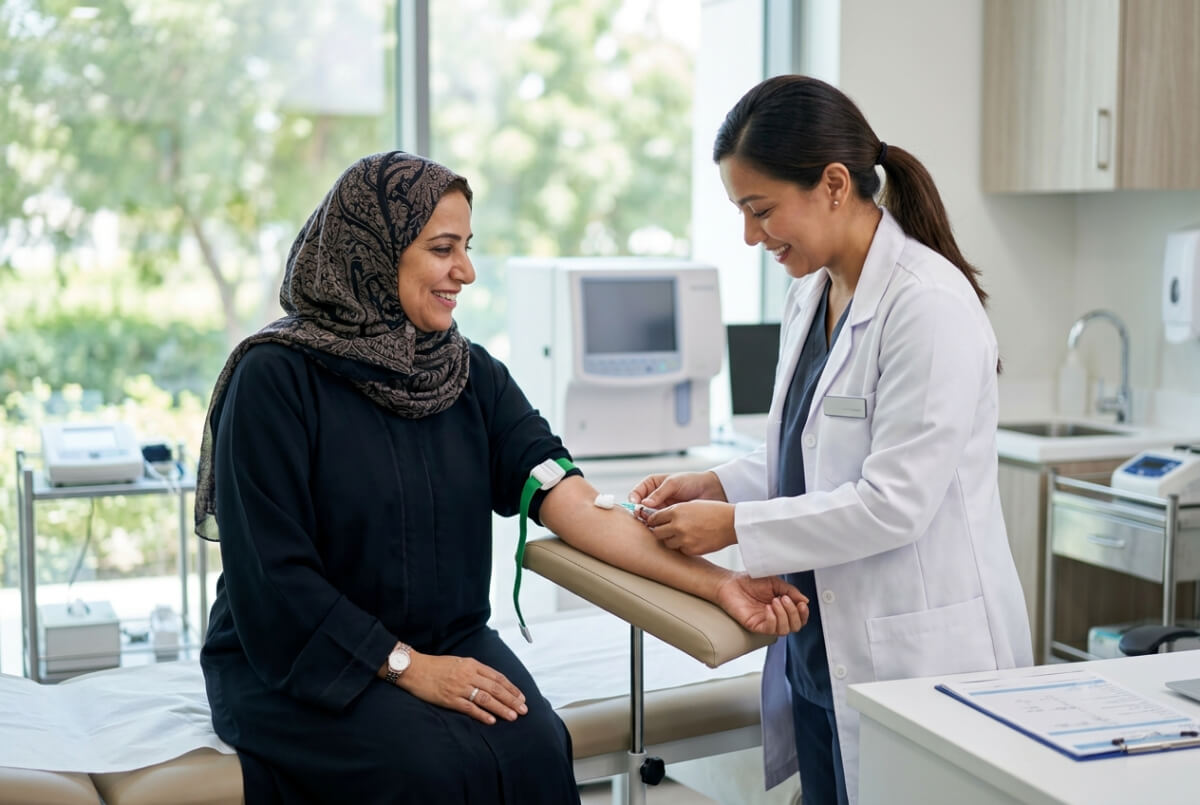
At Everwell Home Health Care Center, liver function test results are typically available within 24–48 hours, with a full panel that includes total bilirubin, direct and indirect fractions, and the supporting liver enzyme markers needed to interpret what an elevated result means. Testing is available at our Dubai clinic or as a home blood draw for patients who prefer not to travel to a facility.
When obtaining a result, if it is high, the next step will vary according to the pattern and clinical history. We believe our team should approach the results in their context, and not only report numbers without direction.
Frequently Asked Questions
What is considered a high bilirubin level?
Total bilirubin is above normal when it exceeds 1.2 mg/dL in adults, while jaundice become detectable at total bilirubin levels of 2.5–3 mg/dL
Does high bilirubin always mean liver disease?
It does not appear clear about the origin of the disease, since it might result from excessive destruction of blood cells, obstruction of the bile duct, or benign reasons such as Gilbert’s syndrome. So, its cause should be thoroughly examined.
What are the symptoms of high bilirubin levels?
Jaundice, dark urine, pale stool, itching, pain in the abdomen, and lack of energy. Mild elevation of bilirubin levels may come without obvious symptoms.
What is Gilbert’s syndrome and is it serious?
Gilbert’s syndrome is a harmless genetic condition evidenced by mild elevation of indirect bilirubin in blood tested especially during fasting episodes and illnesses. It does not need any treatment.
Can I get a bilirubin test done at home in Dubai?
Yes, home blood collection for liver tests including bilirubin is offered by Everwell Home Health Care Centre, with results returned in 24-48 hours.
When should I see a doctor for high bilirubin?
A medical examination is needed at once if jaundice appears suddenly, if there’s pain in the abdomen when jaundice occurs, or if blood tests show considerable jumps in the levels of bilirubin.
Book a Liver Function Test in Dubai
Everwell Home Health Care Center offers comprehensive liver function testing including bilirubin, at home or at our Dubai clinic, with results in 24–48 hours and physician guidance on what your numbers mean.